
We’re in one of those rare moments where the rules haven’t been written yet. After months of building in this space, talking to teams, watching tools come and go, and getting genuinely frustrated along the way, here are the things I keep coming back to. No framework, no conclusions. Just honest observations from someone in the middle of it; engineer first, then PM, now entrepreneur.
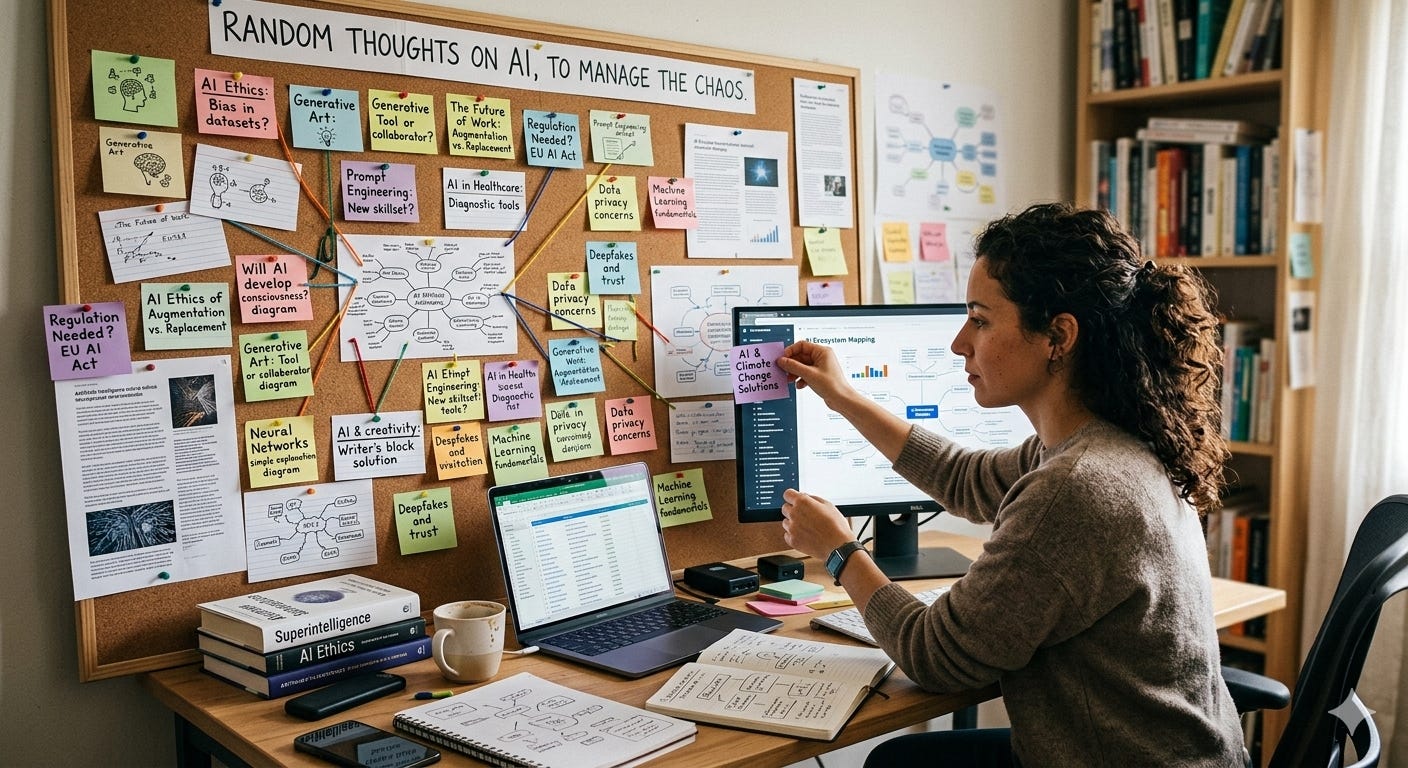
Those comfortable with discomfort will come out ahead.
Stop thinking in roles. Think in functions. What stops an engineer from running product management functions, or a PM from owning design? Experts will still be relevant, but teams can be faster and more effective, especially if they are thin.
Surprisingly few people actually know what they do in their companies, at least from everyone I talk to. Most are running on instinct.
The pace of new tools and methods is genuinely insane. Find your people who actually run things, and learn what’s worth trying from them. LinkedIn and Twitter are mostly noise and flexing. Don’t buy your sellers’ messaging (the ones who build the tools you buy).
Regardless of how models evolve, I still keep four different products open for different tasks. Are they getting worse, or am I just getting AI-lazy?
What Palantir calls the “frontier deployed engineer” should be the standard model: ship it, fix it, adjust it, then generalize. Palantir had the advantage of a configurable platform, but that’s no excuse to wait before scaling.
Non-technical users and clients are far more lost than the tech crowd; most interactions feel like ChatGPT’s launch day all over again. Radical as it sounds, getting something in their hands fast is often more useful than explaining what’s possible.
It’s still unclear whether companies are chasing optimization or genuinely new opportunities. B2B conversations are increasingly exploratory and consultative, helping them figure out what even fits.
Opaque pricing for AI tools is wearing me down. I get my first result, start refining, and my credits are gone. Time-to-value should be your north star.
It’s chaos. And the skill that matters most right now is learning to manage it.
I was not impressed by the metaverse and web3 era. I'm not overhyped about AI either. But I do believe we're far from tapping what we can practically do with LLMs; we still have engineering and experience capacity for improvements.
For now, I prefer hybrid AI solutions; humans in the loop, not out of it.
People won't use large models and chat interfaces for everything. When running common tasks, people want to be fast and think less. "Don't make me think" was the mantra; funny how quickly that got forgotten.
On Product Managers
Product managers sit at an uncomfortable intersection right now, and that’s exactly where they should be. The role was already under pressure before AI accelerated everything. Now the margin for vagueness is gone. The PMs who thrive will be the ones who stop hiding behind process and start owning outcomes. Here’s what I think that looks like in practice:
Those who are strong in non-ticket work will stay relevant and empowered.
Anyone who genuinely cares about creating value should be excited right now.
If you lacked technical or design skills before, there’s no excuse anymore.
For certain product types or functionalities, designers and engineers will assume this role entirely.
Managing chaos with an organizational mindset will be a core differentiator.
Being disconnected from engineers over internal politics is a real liability, and frankly, a shame.
Time to rethink how we split our hours between learning, experimenting, delivering, and packaging.
Vibe-coded prototypes are great for communicating ideas or sparking real customer conversations. But they are prototypes. Don’t wait to ship one unless you already have an internal pipeline behind it.
Well said Joseph! Embrace the (AI) chaos